
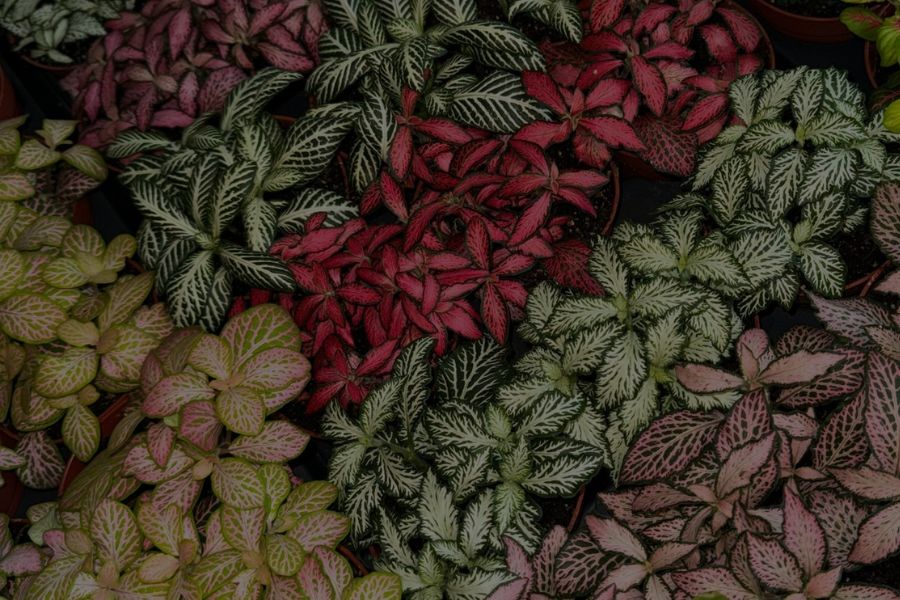

Fittonia plant, or the Nerve Plant (Fittonia albivenis), is commonly grown as a potted plant in most indoor gardens because of its unique appearance. The vibrant oval leaves of this plant feature showy veins that come in shades of white, pink, silver, or pink.
This spreading evergreen plant is also pet-safe, and easy fittonia plant care makes it perfect for beginners. Moreover, this plant also contributes to purifying indoor air, thanks to its great air-purifying abilities.
Fittonia is a slow-growing plant and does not grow tall, but instead can spread up to 12-18 inches. These plants bloom rarely indoors and can also be grown as low-growing ground cover in areas with no frost. So without further ado, let’s explore fittonia plant care and how you can grow this plant easily at home.
Growing Fittonias

Growing the nerve plant is easy as long as you provide it with the basic and simple necessities.
- Area – Fittonia plants thrive in bright and indirect light. Placing these plants near a natural light source, such as a window. Additionally, you can grow these plants under fluorescent or grow lights. Avoid placing them under direct sunlight, which can burn the leaves.
- Potting – These plants look great in planters but are also grown in terrariums that mimic their natural habitat of a tropical forest. Choose a pot with drainage holes that is at least 1-2 inches wider than the root ball. Fittonia plants are also great for dish gardens because of their low creeping growth and shallow roots.
- Soil – For better fittonia plant care, use a well-draining potting mix with orchid bark or perlite.
- Temperature and Humidity – Native to the climate of South America, the fittonia plant thrives in warm and humid conditions. Therefore, for better fittonia plant care, maintain a temperature range from 60℉ to 85℉ and high humidity levels of 50% or higher. Avoid placing the plant near cold drafts or areas with frequent temperature fluctuations.
- Growing Outdoors – If you live in an area with tropical or similar climates, you can grow fittonia as an evergreen perennial in your garden. Grow them in shady locations and provide consistent moisture for better fittonia plant care.
Fittonia Plant Care
Let’s focus on fittonia plant care and the basic needs of this plant.
- Water – Watering the nerve plant can be tricky, as under-watering this plant can lead to it collapsing, while over-watering will result in yellowing leaves. For better fittonia plant care, water the plant consistently but not too much, and use a moisture meter when in doubt.
- Fertilizing – Your fittonia plant will benefit from fertilizing once a month during the active growing season. Use a standard fertilizer suitable for houseplants and dilute it to half the strength.
- Pruning – Pruning is essential for these plants if you want to keep them in a desired shape or size. Prune back a few stems occasionally, and remove flowering spikes to divert the plant’s energy into foliage production.
- Repotting – It is recommended to repot the fittonia plant every 2 to 3 years or when the roots start to outgrow the pot. Spring is the best time to repot the plant. Choose a pot that is 2 inches wider than the current one and use a fresh potting mix to fill it.

How to Propagate Fittionas?
The fittonia plant can be propagated easily via stem cuttings. You can propagate this plant during Spring or Summer while you repot it. Here are the steps to follow for propagating the fittonia plant –
- Take a healthy stem cutting with new leaf growth. Also include at least two growing nodes at the base of the cutting.
- Plant the cutting in a small pot (about 4 inches in diameter) filled with fresh peat-based soil mix. Additionally, you can also apply rooting hormone at the base of the cutting.
- Place the cutting in a spot with bright and indirect light and keep the soil consistently moist but not soggy. The cutting will root in 2-3 weeks, and you can then shift it to a new pot.
Common Problems With the Fittonia Plant
Even though the fittonia plant care is easy and this plant has very few needs, there are some problems that it is prone to, which you’ll need to take care of.
- Pests – Many common indoor plant pests, such as mealybugs and aphids, can infest this plant. Regularly check for any signs of these pests and treat them immediately using insecticidal oil or neem oil. Since fittonia plants thrive in high humidity and moist soil, they can also attract fungus gnats that lay eggs in moist soil, and their larvae can damage the plant. Use sticky traps to prevent these pests.
- Yellow Leaves – The leaves of the fittonia plant will turn yellow when they are being overwatered.
- Brown Leaves – Leaves turning brown and dry might mean that your fittonia plant is placed in low humidity or under direct sunlight. Move your plant to a place with indirect light and maintain high humidity levels around it.
- Leaf Drop – The fittonia plant might drop leaves when exposed to cold drafts and sudden changes in temperature.
- Droopy Leaves – Droopy leaves are a common sign for both over- and underwatering. Check the moisture level of the soil either using a moisture meter or manually by sticking your finger at least 1 inch deep in the soil. Fix your watering schedule according to the moisture level of the soil.
FAQs
How fast do nerve plants grow?
Nerve plants have a slow-growing rate indoors.
Can I grow nerve plants outdoors?
Yes, if you live in an area that has similar conditions to the natural habitat of these tropical plants, then you can grow them outdoors. Protect them from direct sunlight and cold conditions.
Is fittonia a good indoor plant?
These beautiful plants offer a unique display that will improve the appearance of your indoor setups. Moreover, the fittonia plants are safe for pets, have low maintenance, and also contribute to purifying indoor air.
How to make a fittonia bushy?
Occasionally trim stems and remove flowering spikes to maintain a compact and bushy appearance of your fittonia plant.
How often should I water my fittonia?
For better fittonia plant care, water it once a week when the soil feels dry to the touch. Water the soil evenly and not just the top layer.

Raghav is a talented content writer with a passion to create informative and interesting articles. With a degree in English Literature, Raghav possesses an inquisitive mind and a thirst for learning. Raghav is a fact enthusiast who loves to unearth fascinating facts from a wide range of subjects. He firmly believes that learning is a lifelong journey and he is constantly seeking opportunities to increase his knowledge and discover new facts. So make sure to check out Raghav’s work for a wonderful reading.



I was surprised to learn that Fittonia doesn’t grow tall but spreads out—makes it such a great plant for terrariums or smaller spaces. I also really appreciate the air-purifying benefits!